Review | The Ratline - New Names to Old Faces
A measure of punishment awarded to the memory of Nazis is to be eternally mocked, outplayed, outgunned, and outthought in human storytelling — until the Nazis are too old hat to make fun of anymore. The Thousand-Year Reich is to be a reign of humiliation, in which the Nazi is someone who loses. The Ratline is another brick in that righteous wall, crushing one jackboot after another.
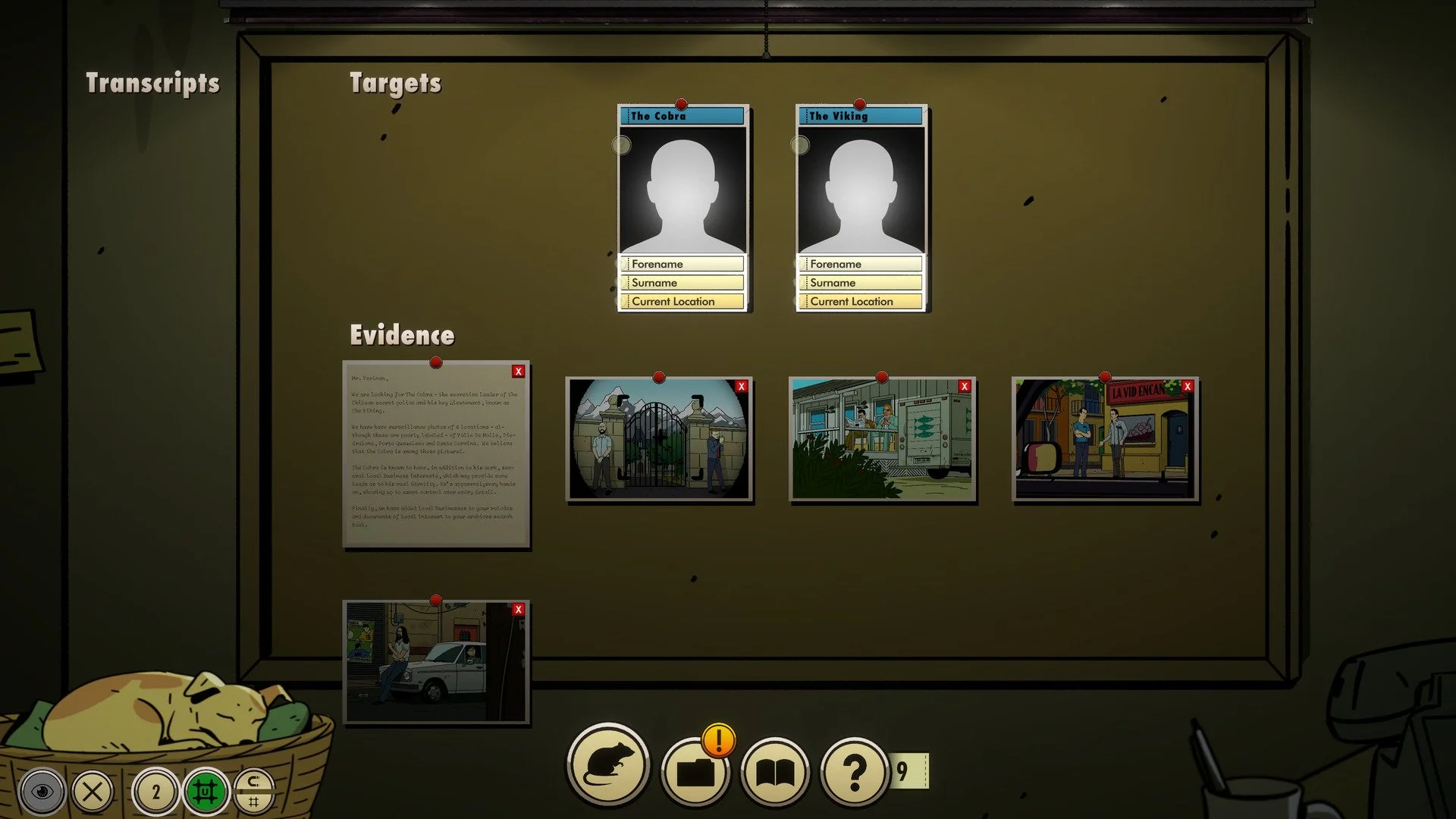
Developed by Owlskip Games, The Ratline is a deduction game very much in the vein of The Roottrees are Dead, The Seance of Blake Manor (a favourite of mine), and the ever-brilliant Return of the Obra Dinn. Like its peers, the game comes down to examining evidence and inputting answers which are then confirmed or denied.
The game first demonstrates this mechanic when the discovery of your own name, Saul Perlman, which is offered in a postcard at the start of what ought to be your final case. Saul is a New York City private investigator on the verge of exiting the business. The plot gets going when an anonymous caller coerces him to take on an investigation about a series of people who seem connected to the dramatic murder of a priest, in which the word RATLINE was written above the altar.
Ratlines, it may interest you to know, were Nazi escape routes set up in the postwar period. It was a ratline that allowed Adolf Eichmann to find safe haven in Argentina.
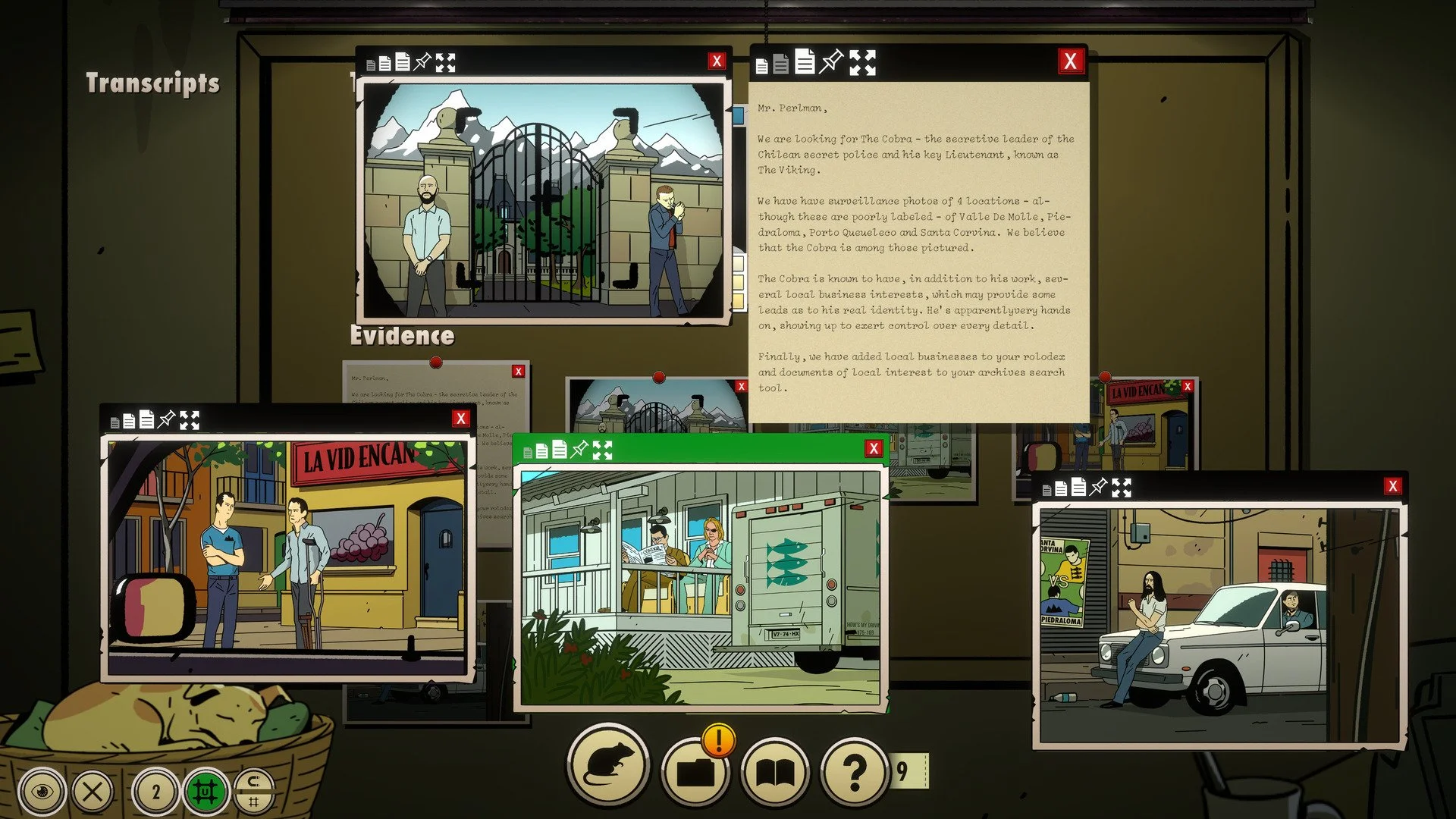
The game takes place entirely in Saul's apartment. Your resources are: your phonebook, phone, and an electronic device that lets you scour public libraries for keywords. These always-present tools are augmented by whatever materials are provided with the starting brief. This can include photographs, correspondence, and recorded conversations, as well as articles, memos, and receipts. When a case ends, all the evidence goes into an archive.
Though the inciting incident appears to launch a Cold War thriller, in truth the game is pretty thin on narrative. Certainly, in a detective game it is not welcome to leave much to the imagination, allowing the player to construct the story suggested by its various elements. Unfortunately, The Ratline could really have used a more robust framing narrative, because, yes, what story it does present comes across as the merest framing device for performing a series of puzzles.
Take the game's phone calls, for instance, which come across less as an exchange between real people and more as the game rewarding players with information for finding the right number. These perfunctory social interactions are a real void in a story that at its core is about human interaction.
Story agnostics will feel at home, however, as the puzzles can be quite challenging. I appreciated the quasi-bureaucratic process of gathering and mining evidence for useful information, the managing of which is up to your own intelligence. The mental state that this ant-like work can sometimes require brings a unique feeling that is not often leveraged in or out of puzzle games.
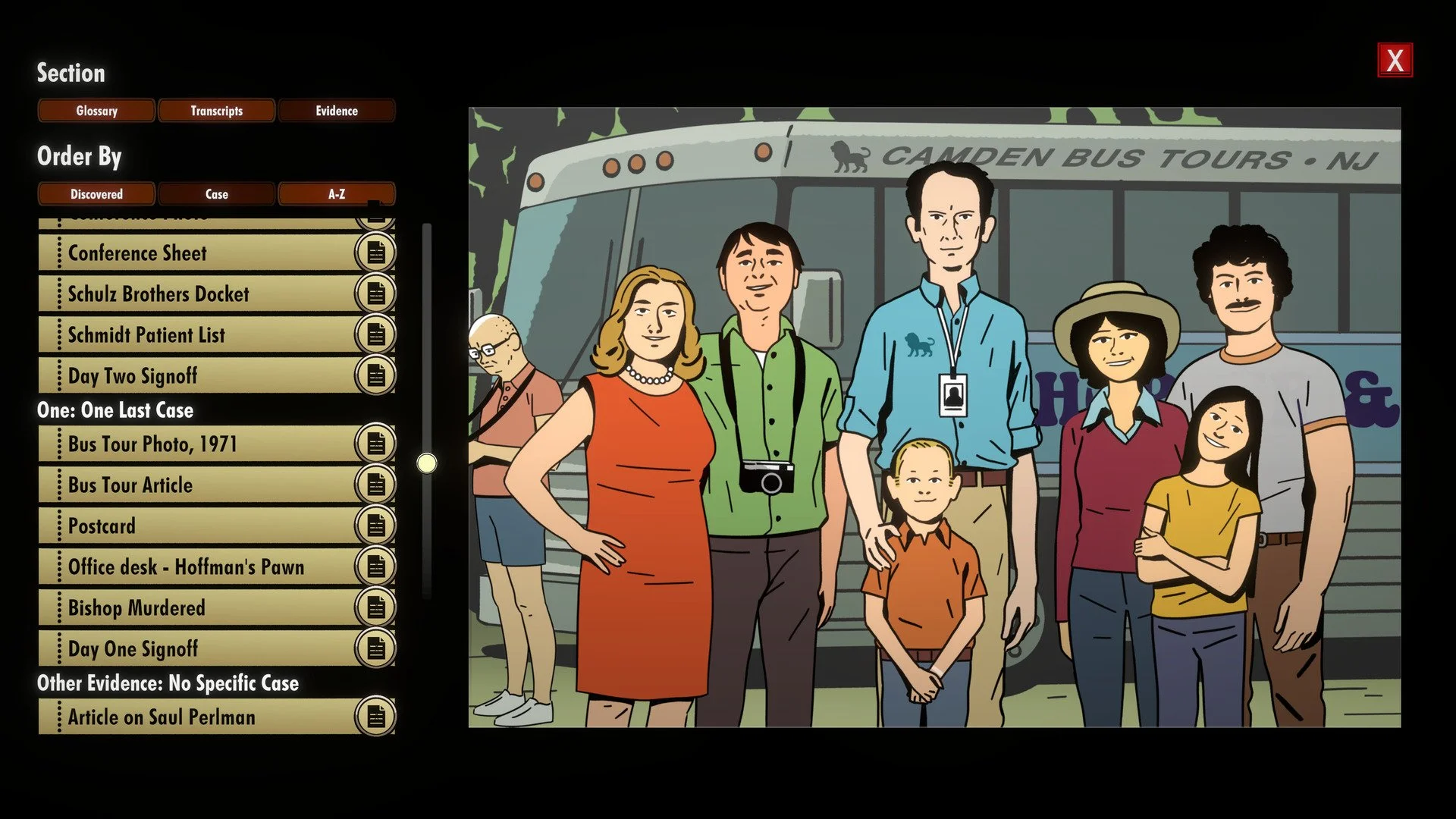
Nothing is forgotten. Both in the sense that the plot is driven by people who can't let go, and in that recalling the details of previous cases is essential to progressing through new ones. The archive is there for a reason, it turns out. But I highlight this because remembering is the game's most well-implemented theme. Remembering yes, Nazi crimes, but also the history of the real ratlines and the regrets those involved may have formed in the process. Remembering is also a key mental process for advancing through the game, and the marriage between this conceptual element and the practicality of wading through the archive for past details is the game's best bit of design.
There is a lowkey technological angle to The Ratline, as well. You listen to the radio in your home, scan conversations recorded through illegal surveillance, and track a global conspiracy from your one-room apartment. It simulates the clerk-like job of the data analyst and previews the newly born globalised world in which nothing may remain unknown. It's no wonder that the game takes place in 1971, the year in which The French Connection — which it also references — launched a decade of exquisite thrillers.
The hunting of Nazis forms a fascinating subchapter of the Cold War, part of which this title attempts to fictionalise. Since the game is so light on narrative the fictionalising is up to the detective process, and the process is not strong enough to transform a group of mechanics into an emotional edifice. It will always be missing a real human voice.
The Ratline was played on PC with a code provided by the publisher.